
Last week, I explained why the Reserve Bank of Australia keeps interest rates high and why mortgage holders often feel like they’re carrying the burden of the fight against inflation.
During the week, the latest inflation figures from the Australian Bureau of Statistics (ABS) help answer an important follow-up question:
What exactly is becoming more expensive, and why does inflation still feel painful despite years of interest rate rises?
The answer is simple.
Most Australians don’t experience inflation through percentages and economic reports. They experience it through the bills they pay every week.
And right now, some of the biggest pressures are coming from housing, electricity, and fuel.
The Inflation Rate Doesn’t Tell the Whole Story
The headline inflation rate sits at 4.3%, meaning that, on average, prices are 4.3% higher than they were a year ago.
But nobody buys the “average basket” measured by the ABS.
Instead, households spend money on:
- Housing
- Electricity
- Fuel
- Groceries
- Insurance
- Healthcare
The impact of inflation depends on which of these expenses are increasing the fastest.
A family that spends heavily on categories experiencing rapid price growth will feel much more pressure than the headline figure suggests.
Housing Remains the Biggest Pressure Point
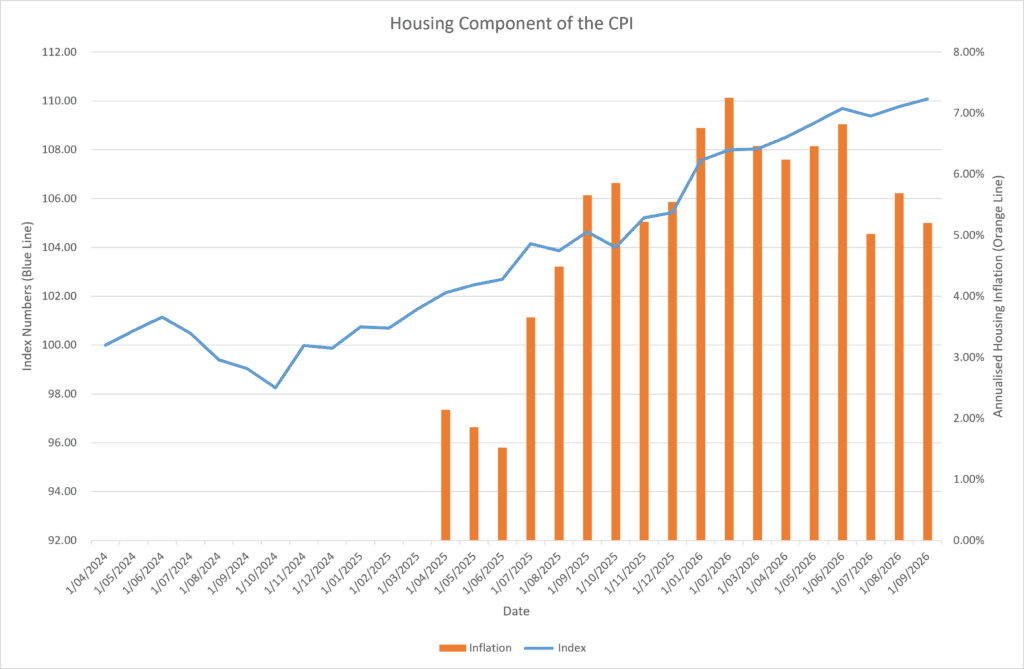
According to the ABS, housing costs increased by 5.2% over the past year, making housing one of the largest contributors to inflation. This includes costs associated with building new homes and maintaining housing supply.
For homeowners, this comes on top of elevated mortgage repayments caused by higher interest rates.
For renters, rising housing costs eventually work their way into rent increases as landlords face higher costs of their own.
This creates an uncomfortable reality:
Whether you own your home or rent it, housing continues to absorb a growing share of household income.
Electricity Bills Are Climbing Again
Many Australians can postpone replacing a television or buying new furniture.
They cannot postpone paying the electricity bill.
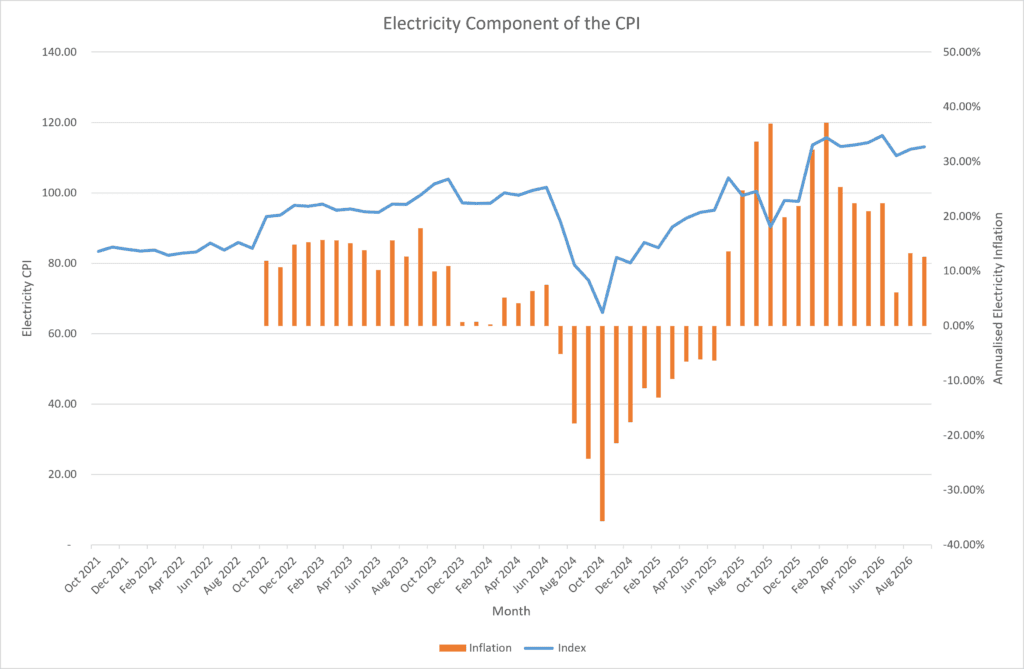
The ABS reports that electricity prices have increased by 12.8% over the past year.
Consider a household spending $250 per month on electricity.
A 12.8% increase lifts that bill to approximately $282 per month.
That may not sound dramatic, but over a year it adds roughly $380 to the household budget without delivering any additional benefit.
You are paying more simply to consume the same amount of electricity.
Petrol Is Quietly Taking a Bigger Bite Out of Household Budgets
Perhaps the most significant increase has been fuel.
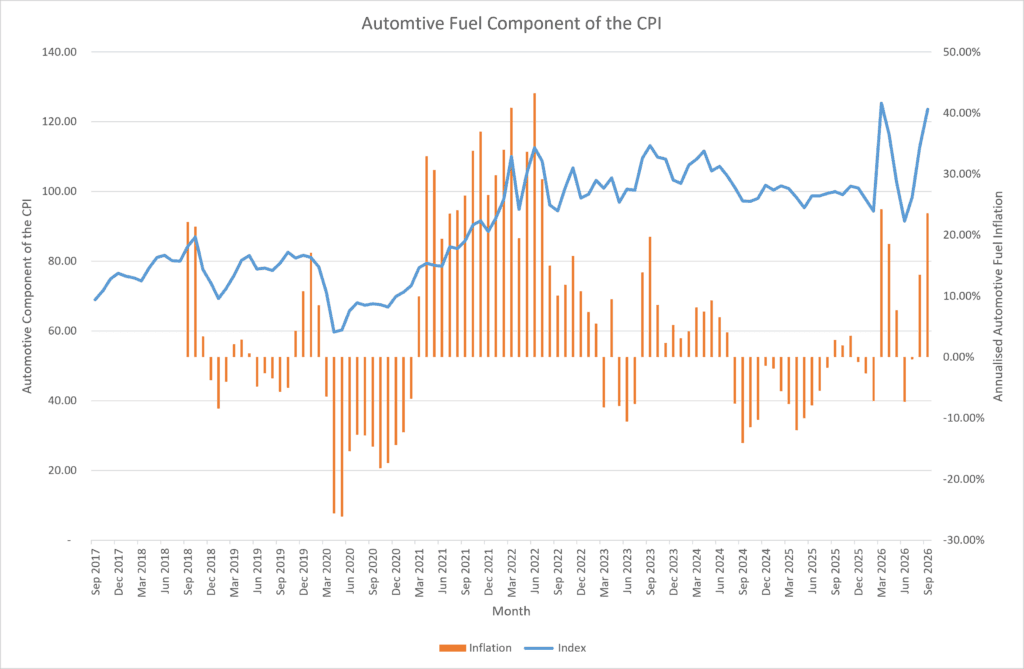
The ABS reports that automotive fuel prices have risen by 23.6% over the past year, including a substantial rise during September alone.
For many Australians, particularly those living in suburban or regional areas, driving is not optional.
A household spending $100 per week on petrol last year would now be spending approximately $124 per week.
Over the course of a year, that’s an increase of more than $1,200.
Unlike discretionary spending, there is often little opportunity to avoid these costs. People still need to commute to work, take children to school, and travel for essential activities.
Why the RBA Still Worries About Inflation
This helps explain why the Reserve Bank remains cautious about reducing interest rates.
When households hear that inflation is “only” 4.3%, it is easy to think the problem has largely been solved.
But inflation is not yet back within the RBA’s target range of 2% to 3%.
More importantly, some of the biggest increases are occurring in essential categories that households cannot easily avoid.
If the RBA were to cut rates too early and inflation accelerated again, the cost of housing, electricity, fuel, and other necessities could rise even faster.
That would ultimately leave households worse off.
The Real Cost of Inflation
The most important lesson from the latest inflation figures is that inflation is not an abstract economic concept.
It is the extra amount you pay every time you:
- Receive an electricity bill.
- Fill up your car.
- Pay your rent.
- Make a mortgage repayment.
- Buy groceries.
While headlines focus on a single inflation number, household budgets are affected by the prices that matter most in everyday life.
And right now, those essentials are still becoming more expensive.
That’s why many Australians continue to feel financially squeezed, even after years of interest rate rises. The fight against inflation may be working, but for many households, it certainly doesn’t feel over yet.
Leave a Reply