
Part 3 of the Series: Interest Rates: The Most Important Price in the Economy
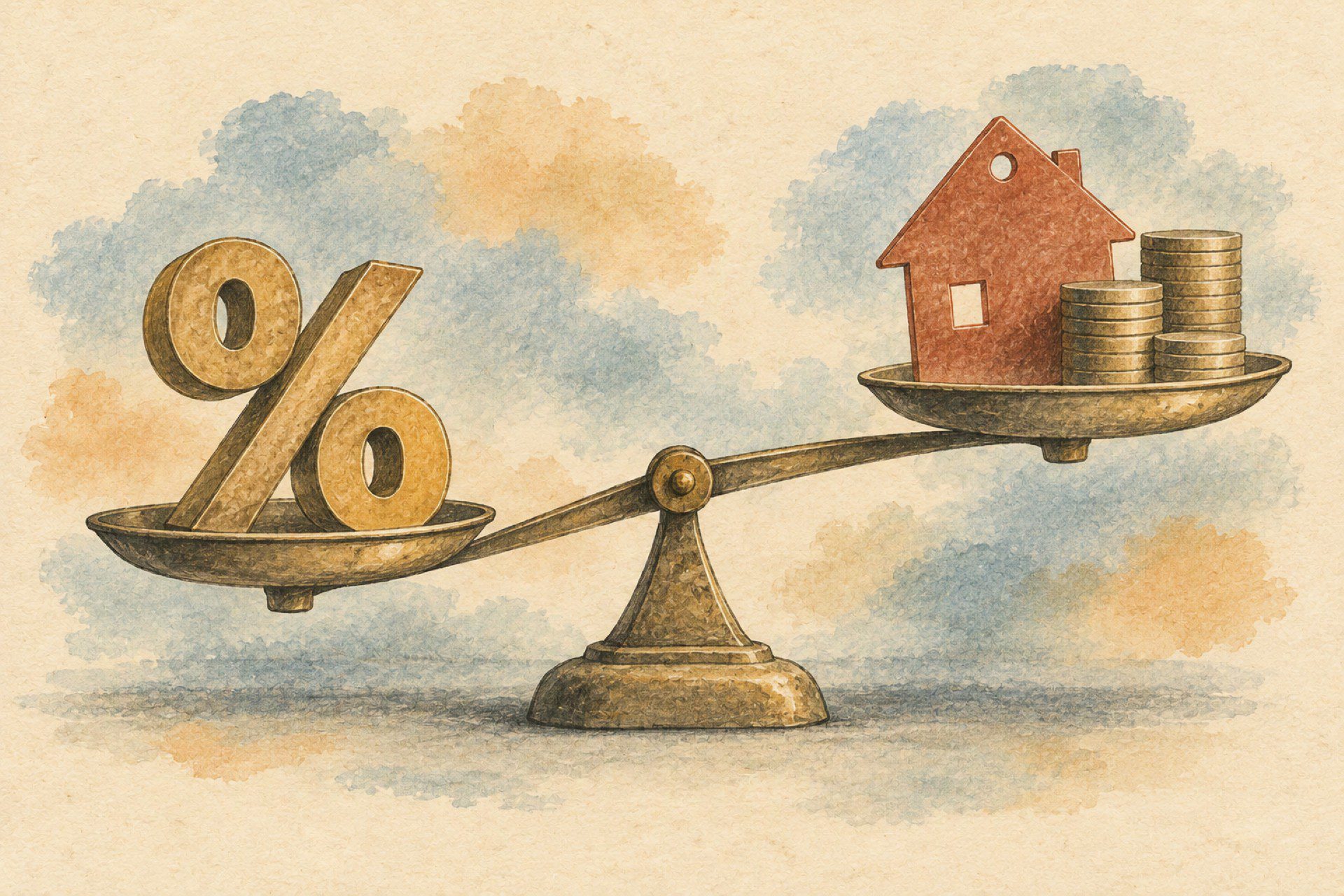
When the Reserve Bank changes interest rates, one question quickly dominates public discussion: What will happen to house prices?
The relationship between interest rates and housing is one of the most closely watched connections in the Australian economy. Property owners, first-home buyers, investors and policymakers all understand that interest rates matter.
What is less widely understood is how they matter.
Many people imagine that lower interest rates somehow make houses intrinsically more valuable, while higher interest rates make them worth less. But economists typically focus on something more important than the value of the house itself.
They focus on borrowing capacity.
Interest rates influence how much households can borrow. Borrowing capacity influences how much households can bid. And because most Australian homes are purchased with mortgage finance, changes in borrowing capacity can have a powerful effect on housing demand and house prices. [1]
Housing Is Not Like Most Markets
If you buy a television for $1,000, you generally need $1,000.
Housing is different.
A household purchasing an $800,000 property might contribute a deposit of $160,000 and borrow the remaining $640,000 through a mortgage.
Because debt finances much of the purchase price, access to credit becomes a crucial force in determining demand.
This is one reason housing markets respond so strongly to monetary policy. Changes in interest rates alter the cost and availability of credit, which affects how much buyers can afford to spend.
For many households, the question is not “What house do we want?” but “What house can we finance?”
Why Borrowing Capacity Matters
Consider two households with identical incomes and identical savings.
The only difference is the interest rate on their mortgage.
The household facing a lower mortgage rate can generally service a larger loan with the same monthly repayment.
As a result, that household can bid more for housing.
When interest rates fall across the entire economy, this effect is experienced by hundreds of thousands of potential buyers simultaneously.
The result is an increase in purchasing power.
Importantly, the number of houses available for sale does not immediately change when borrowing capacity increases. If more buyers can suddenly afford larger loans while supply remains largely fixed, competition for existing homes tends to intensify.
In many circumstances, that additional purchasing power is reflected in higher prices rather than a larger supply of housing.
What Does the Evidence Show?
Australian research consistently identifies interest rates as an important influence on housing prices.
A study by Abelson, et. al., found that real mortgage rates were a significant long-run determinant of Australian house prices between 1970 and 2003. Their analysis showed that higher mortgage rates were associated with lower house prices, alongside other important factors such as income, unemployment and housing supply. [1]
Similarly, Glenn Otto examined house-price growth across Australia’s capital cities and found that mortgage rates were an important influence in all eight capitals. However, the size of the effect differed from city to city. A 25-basis-point increase in mortgage rates was estimated to reduce long-run quarterly house-price growth by around 1 per cent in Sydney but only around 0.4 per cent in Adelaide. [2]
These findings highlight an important point: interest rates matter everywhere, but they do not affect every housing market equally.
Why Falling Rates Can Push Prices Higher
Lower interest rates typically affect housing markets through several channels at once.
First, lower mortgage rates increase borrowing capacity.
Second, existing mortgage holders often experience lower repayments, increasing disposable income.
Third, lower interest rates can make other investments such as cash deposits and bonds less attractive relative to property.
Fourth, investors may be more willing to purchase property when financing costs fall.
As these effects combine, housing demand can increase.
Research by Graham and Read, found that expansionary monetary policy shocks tend to increase Australian house prices, providing further evidence that easier financial conditions can support stronger housing demand. [3]
However, lower interest rates do not automatically create housing booms. Their effects interact with broader economic conditions, including employment growth, population growth and housing supply.
Why Higher Rates Can Have a Larger Impact
One of the most interesting findings in the research literature is that house prices do not necessarily respond symmetrically to changes in interest rates.
Many people assume that if a 1 per cent reduction in mortgage rates raises house prices by a certain amount, then a 1 per cent increase should lower prices by the same amount.
The evidence suggests otherwise.
Research by Valadkhani, Nguyen, and O’Brien found that rising mortgage rates often have a stronger effect on house prices than falling rates. In Sydney, for example, a 1 per cent reduction in mortgage rates was associated with a house-price increase of around 0.7 per cent, while a 1 per cent increase in rates was associated with a price decline of around 1.5 per cent. [4]
This suggests that housing markets can be particularly sensitive when borrowing conditions tighten.
The adjustment process may therefore be more painful on the way up than it is rewarding on the way down.
Interest Rates Are Not the Whole Story
Although interest rates play a major role, they do not fully explain Australia’s housing market.
Research consistently identifies a range of additional influences, including:
- Population growth
- Household income growth
- Employment conditions
- Housing construction
- Land supply
- Planning regulations
- Tax settings
- Investor behaviour
- Credit availability [5] [6]
This is why housing markets sometimes remain resilient even during periods of rising interest rates.
Strong population growth, limited housing supply or rising incomes can offset some of the downward pressure that higher borrowing costs might otherwise create.
Similarly, falling interest rates may have only a limited effect if economic conditions are weak or credit standards become more restrictive.
Housing prices are shaped by many forces simultaneously.
Interest rates are important, but they are not destiny.
The Housing Affordability Puzzle
The relationship between interest rates and housing affordability is more complicated than many people realise.
Lower rates make mortgage repayments more affordable in the short run. However, if lower rates contribute to higher house prices, new buyers may ultimately need to borrow larger amounts.
Recent research by Yadav, Cusbert, and Graham suggests that the long decline in interest rates between 1995 and 2019 contributed significantly to rising house prices in Australia. Their modelling indicates that these higher prices explain a substantial portion of the decline in home ownership among younger Australians during that period. [7]
In other words, lower interest rates may make borrowing easier while simultaneously increasing the size of the loan needed to enter the housing market.
This helps explain why housing affordability remains one of Australia’s most challenging economic issues.
Why Economists Care About Housing
Housing occupies a unique position in the Australian economy.
For many households, the family home is their largest asset.
For banks, mortgages represent a major part of lending activity.
For policymakers, movements in house prices influence spending, confidence and financial stability.
This is why economists pay such close attention to the relationship between interest rates and housing markets.
Interest rates influence borrowing capacity.
Borrowing capacity influences housing demand.
Housing demand influences prices.
The chain of events is straightforward, even if the housing market itself is not.
But housing is only one part of the broader story.
When interest rates rise, some Australians face higher borrowing costs and weaker housing markets. At the same time, other Australians may benefit from higher returns on savings and term deposits.
Understanding who wins and who loses when interest rates change is the focus of the next article in this series.
Endnotes
- Abelson, P; Joyeux, R; Milunovich, G; & Chung, D. (2005). Explaining House Prices in Australia: 1970–2003. Economic Record, 81(s1), S96-S103. https://doi.org/10.1111%2Fj.1475-4932.2005.00243.x
- Otto, G. (2007). The Growth of House Prices in Australian Capital Cities: What Do Economic Fundamentals Explain? Australian Economic Review, 40(3), 225-238. https://doi.org/10.1111/j.1467-8462.2007.00453.x
- Graham, J; & Read, A. (2023). House Prices, Monetary Policy and Commodities: Evidence from Australia. Economic Record, 99(324), 1-31. https://doi.org/10.1111/1475-4932.12705
- Valadkhani, A; Nguyen, J; & O’Brien, M. (2019). Asymmetric responses of house prices to changes in the mortgage interest rate: Evidence from the Australian capital cities. Applied Economics, 51(53), 5781-5792. https://doi.org/10.1080/00036846.2019.1619026
- Berry, M; & Dalton, T. (2004). Housing prices and policy dilemmas: A peculiarly Australian problem? Urban Policy and Research, 22(1), 69-91. https://doi.org/10.1080/0811114042000185509
- Rahman, M. (2010). The Australian housing market – understanding the causes and effects of rising prices. Policy Studies, 31(5), 577-590. https://doi.org/10.1080/01442872.2010.497261
- Yadav, A; Cusbert, T; & Graham, J. (2024). Declining Interest Rates and Homeownership in Australia. Reserve Bank of Australia. https://www.rba.gov.au/publications/workshops/research/2024/pdf/rba-workshop-2024-yadav-cusbert-graham.pdf
Leave a Reply