
with Travis Nice
Blog
-
Can AI Restart Australia’s Productivity Growth?

Artificial intelligence is often described as the next great productivity revolution. But history suggests technology alone does not improve living standards. From electricity to the internet, major innovations delivered their greatest benefits only after businesses adapted, invested and reorganised around them. The same question now faces Australia: can AI help restart productivity growth, or will…
-
How Competition and Investment Shape Productivity in Australia

Australia’s productivity slowdown is often blamed on technology, skills or worker performance. Yet some economists argue a more important question is whether labour and capital are flowing to the businesses that use them most effectively. This article examines how competition, investment and resource allocation influence productivity growth, and why they may hold the key to…
-
The Great Productivity Slowdown: What Happened to Australia’s Economic Engine?

Australia’s productivity challenge did not begin with COVID-19 or the recent cost-of-living crisis. The slowdown has been developing for more than two decades, gradually reducing the pace at which living standards improve. This article explores how Australia moved from the productivity surge of the 1990s to today’s slower growth environment, and why understanding that shift…
-
Productivity Isn’t Everything. In the Long Run, It’s Almost Everything.

Why do economists spend so much time talking about productivity? The answer is simple: over the long run, living standards depend less on how hard we work and more on how much value we create. Productivity growth allows businesses to produce more with the same resources, supports higher wages, and raises living standards without requiring…
-
Australia’s Economy Keeps Growing. So Why Don’t We Feel Richer?

Excerpt Australia’s economy is larger than ever, but many Australians don’t feel substantially better off. While total GDP has continued to grow, GDP per capita has slowed markedly over the past decade, creating a disconnect between headline economic success and everyday experience. This article explores that puzzle and explains why economists focus on productivity, not…
-
Can More Competition Reduce Inflation?
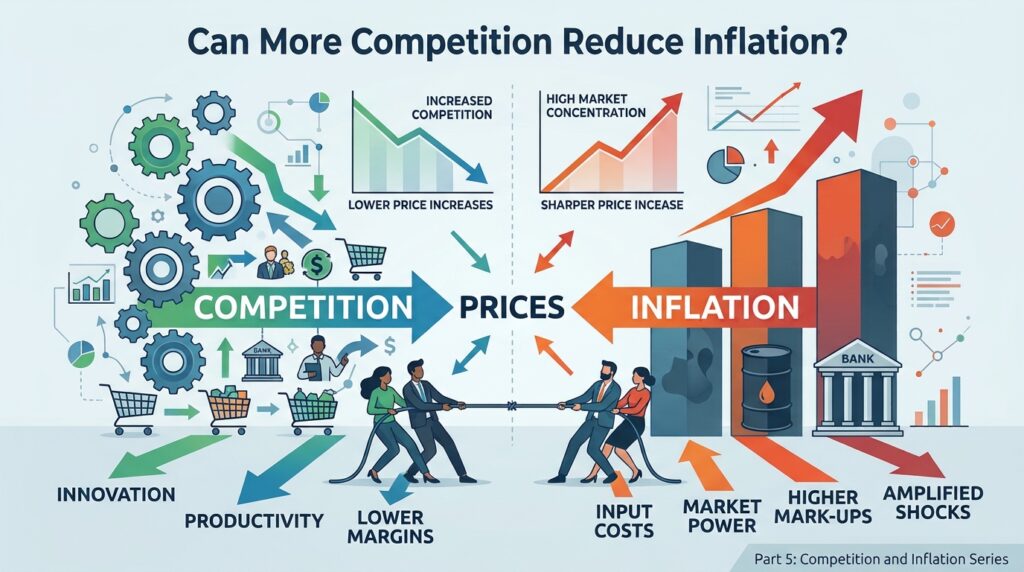
Can stronger competition reduce inflation? Examining market power, productivity, competition policy and the reforms that could make Australia’s economy more resilient to future inflation shocks.
-
Pricing Power in Practice: Supermarkets, Banks and Insurers

Inflation affected industries differently. An analysis of supermarkets, banks and insurers reveals how pricing power, competition and market structure shaped profitability during Australia’s cost-of-living crisis.
-
The Profit Test: Which Australian Companies Actually Expanded Margins?

When inflation surged, many Australians assumed large companies were enjoying record profits. A review of financial statements from 12 major Australian companies reveals a more complex story, with profit growth varying significantly between supermarkets, banks, insurers and energy producers.
-
Australia’s Competition Problem: Too Much Power in Too Few Hands?
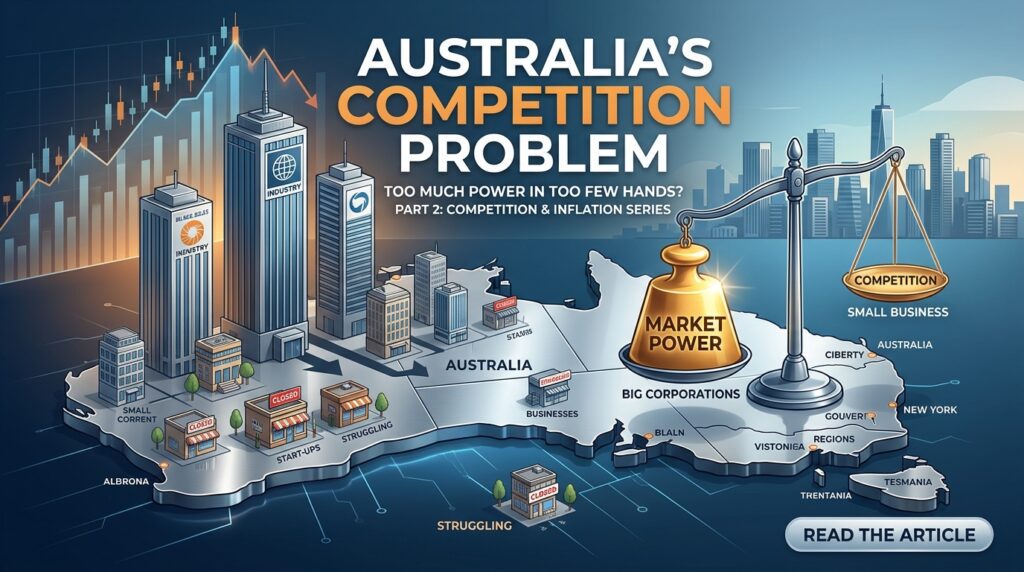
Australia’s competition debate is about more than prices. As industries become increasingly concentrated, economists and regulators are asking whether weaker competition is contributing to higher prices, slower productivity growth, and greater pricing power for dominant firms.
-
Greedflation: Myth, Reality, or Something In Between?
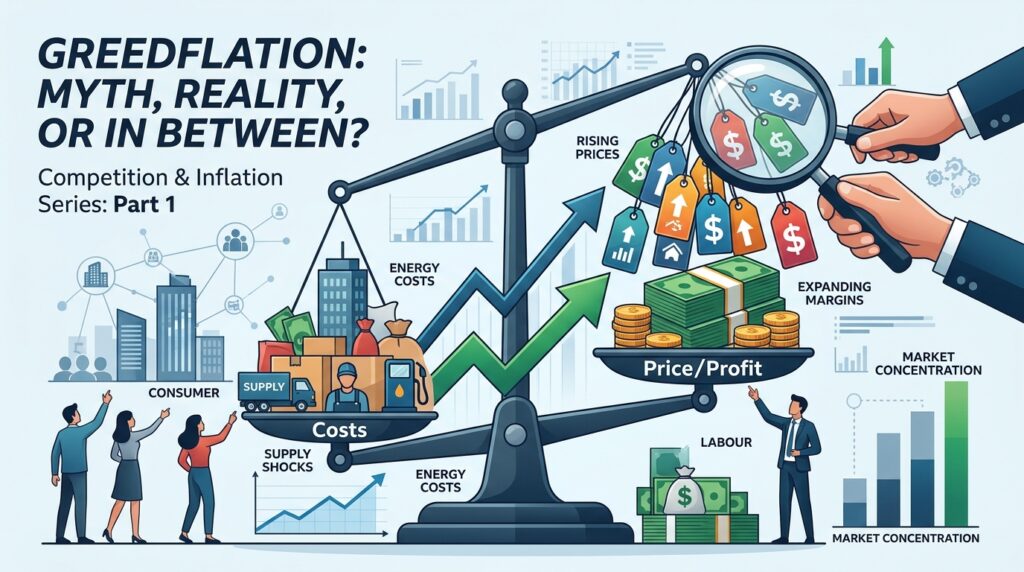
Did companies use inflation as cover to raise prices, or were supply shocks the real cause of Australia’s cost-of-living crisis? This article explores the evidence behind greedflation, examining corporate profits, market power, competition and recent economic research to separate myth from reality.