The inflation rate might be the same for all Australians, but the experience rarely is.
When the Australian Bureau of Statistics announces the latest inflation figure, news headlines often focus on a single number.
- Inflation is 3%.
- Inflation is 4%.
- Inflation is falling.
- Inflation is rising.
But while there may be one official inflation rate, there is no such thing as an average Australian household.
That’s why inflation can feel completely different from one person to the next.
A retiree living on a fixed income, a family with a mortgage, a renter in an inner-city apartment and a high-income professional may all be living through the same inflationary environment. Yet each can walk away with a very different impression of how expensive life has become.
Understanding why helps explain many of the disagreements that emerge whenever inflation becomes a political issue.
The Problem with Averages
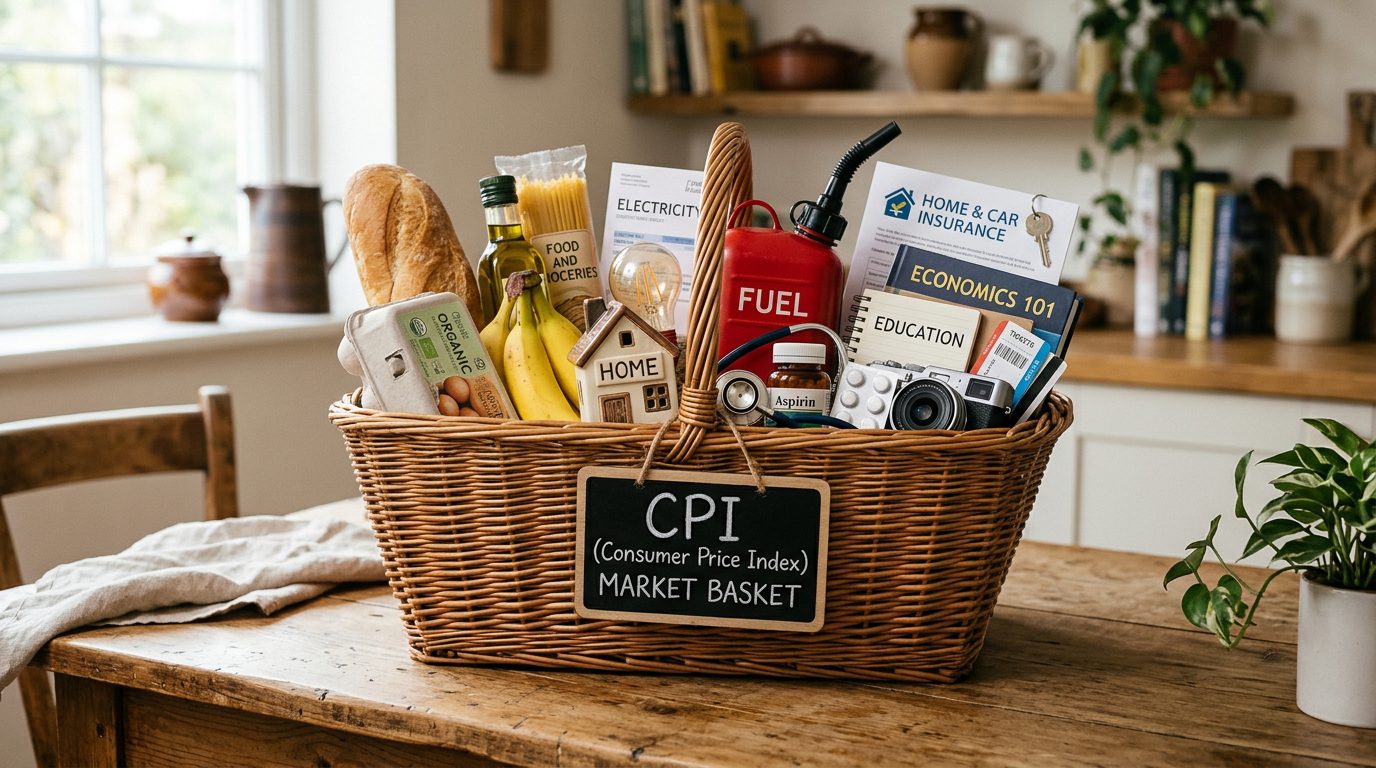
Australia’s Consumer Price Index (CPI) measures changes in the price of a basket of goods and services that represents the spending patterns of the average household.
The basket includes things such as:
- Housing,
- Food and groceries,
- Electricity,
- Fuel,
- Healthcare,
- Education,
- Insurance, and
- Recreation.
The approach makes sense. Policymakers need a way to measure inflation across the entire economy.
The problem is that nobody lives the life of the average household. Every Australian allocates their spending differently. A young family may spend heavily on childcare and mortgage repayments. A retiree may spend more on healthcare and utilities. A university student may spend a large portion of their income on rent. A professional working from home might spend relatively little on fuel compared with someone who drives long distances every day.
As a result, two households can experience very different cost pressures even when the official inflation rate is identical.
What Australians Actually Spend Money On
The Australian Bureau of Statistics (ABS) updates the CPI basket each year to reflect how households spend their money. While spending patterns vary between individuals, housing remains the largest category in the CPI basket, followed by recreation, transport and food. The ABS has also noted that recent years have seen increases in the relative importance of food, health and transport spending as household budgets have adjusted to rising costs.
This matters because changes in the prices of heavily weighted items have a much bigger impact on household budgets than changes in discretionary purchases.
When Australians spend a large share of their income on housing, food and transport, increases in those categories tend to be felt more acutely than price changes elsewhere in the economy.
The Prices We Notice Most
Another reason inflation feels different is that not all prices have the same impact on our daily lives.
Most people could not tell you whether televisions are 10% cheaper than they were two years ago.
Few people closely monitor the price of appliances or furniture.
But almost everyone notices when the price of essentials rises.
People notice:
- Petrol,
- Groceries,
- Electricity,
- Gas,
- Rent, and
- Mortgage repayments.
These are recurring expenses that appear in our budgets every week or every month.
A $20 increase in a weekly grocery bill is felt immediately.
A cheaper television six months from now is unlikely to offset that feeling.
That helps explain why public perceptions of inflation can differ significantly from the headline figures reported by economists and policymakers.
The Prices That Have Been Rising Fastest
The latest ABS inflation data helps explain why many households continue to feel under pressure despite headline inflation being lower than its pandemic peak.
In the year to September 2026:
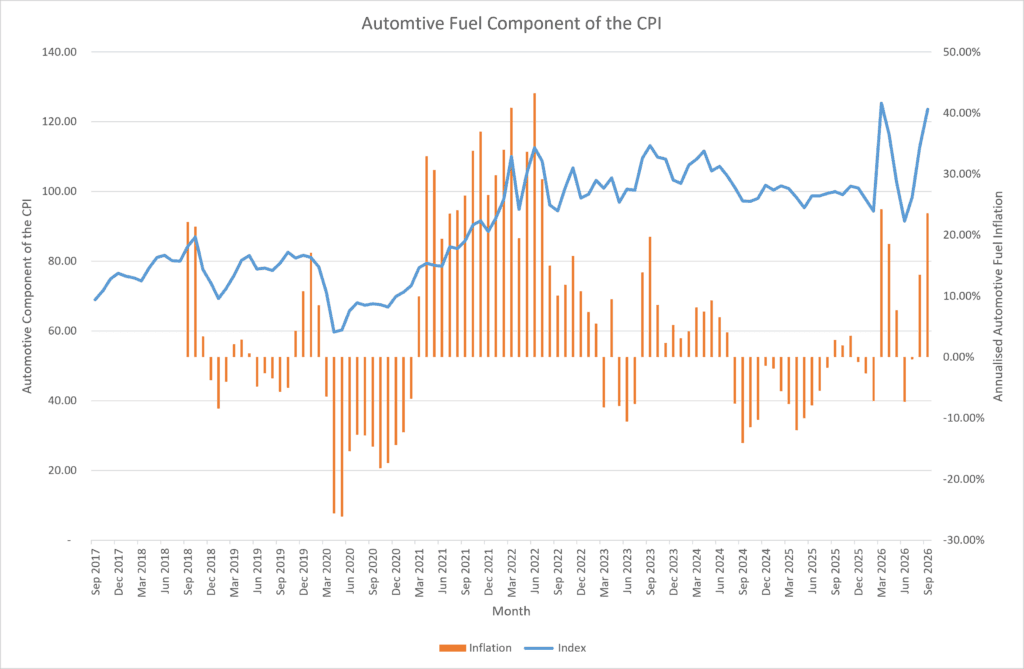
- Automotive fuel prices rose 23.6%,
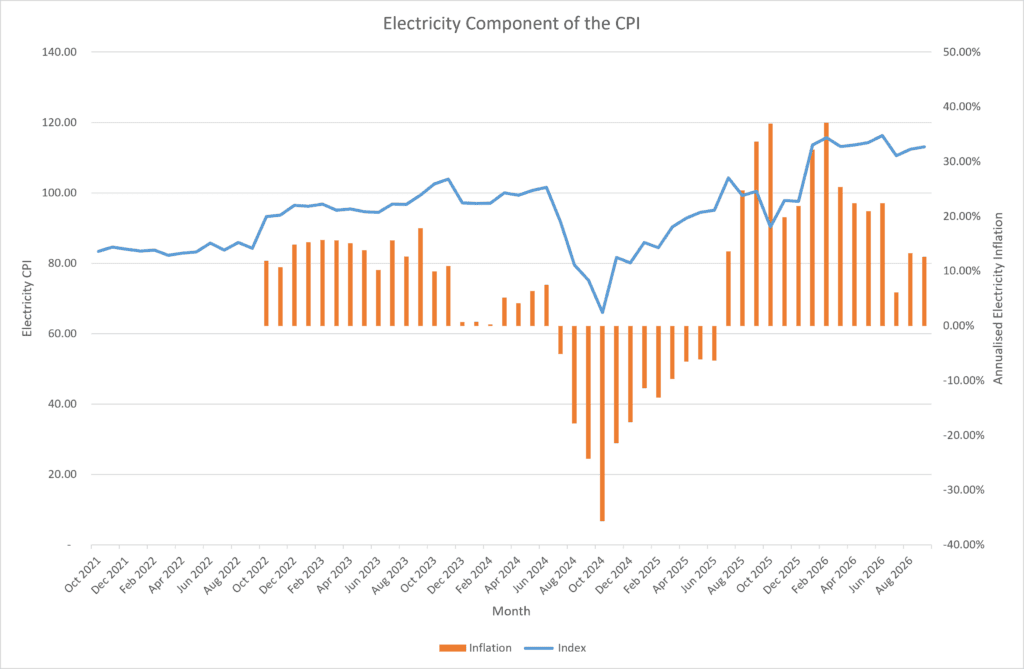
- Electricity prices rose 12.8%,
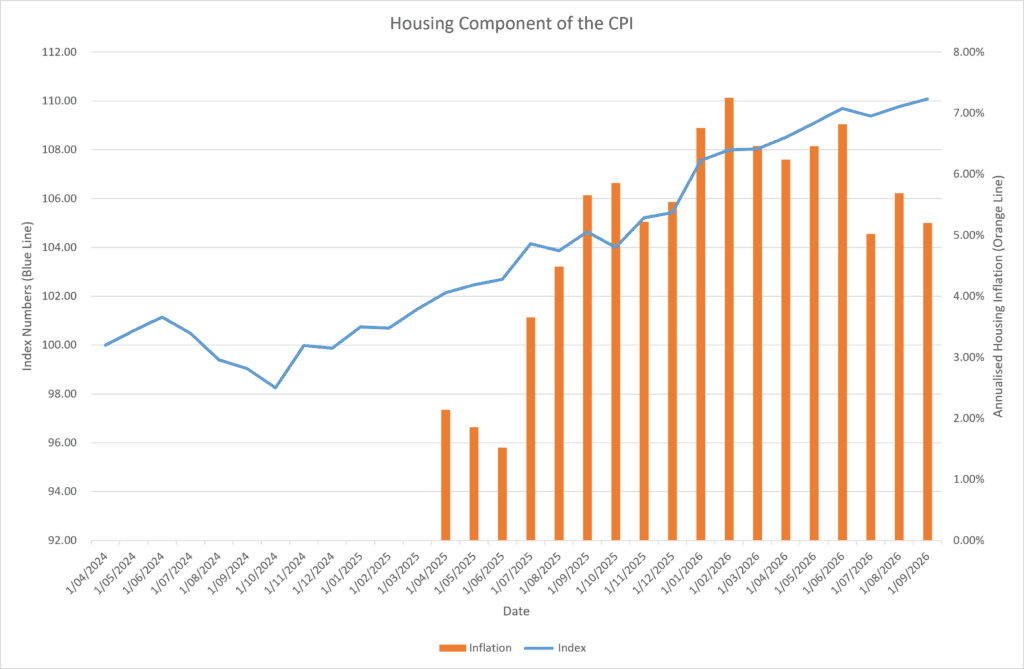
- Housing costs rose 5.2%,
- Rents rose 3.5%, and
- Food and non-alcoholic beverages rose 3.2%.
These are exactly the kinds of expenses households encounter every week.
By contrast, consumers are less likely to regularly notice changes in categories such as communications equipment, household appliances or other infrequent purchases.
As a result, many Australians judge inflation based on the prices they encounter most often, rather than the broader basket used to calculate the CPI.
Inflation Creates Winners and Losers
Inflation is often discussed as though everyone suffers equally.
Inflation changes the distribution of income and wealth throughout the economy.
Some groups can end up worse off.
Others may be relatively protected.
Workers whose wages rise more slowly than prices experience a decline in purchasing power.
Retirees relying on fixed incomes may find everyday expenses consuming a larger share of their budget.
Households with substantial savings can see the value of those savings eroded over time.
At the same time, borrowers may benefit if their debt remains fixed while incomes eventually rise.
Businesses operating in industries with strong demand may retain profitability despite higher costs.
Exporters can sometimes benefit if inflation is accompanied by a weaker exchange rate that makes Australian goods more competitive overseas.
This doesn’t mean inflation is good for these groups. Rather, it highlights that inflation is a process of economic redistribution as much as it is a rise in prices.
Mortgage Holders and Renters Face Different Pressures
Recent ABS Living Cost Index data highlights how different households experience inflation in different ways.
In the June quarter 2026, living costs rose between 3.7% and 4.7% across different household types, with housing, food and insurance costs among the largest contributors.
This helps explain why two households may report very different experiences of the economy.
A homeowner with a large mortgage is particularly sensitive to interest rate changes.
A renter may be far more concerned about rental availability and vacancy rates.
A retiree may feel the impact of rising utility and healthcare expenses more intensely.
All of them are experiencing inflation, but not necessarily in the same way.
Why Inflation Becomes Political
The September 2026 CPI figure showed annual inflation running at 4.3%, while wage growth was 3.2% in the most recent ABS Wage Price Index data. For many households, that gap helps explain why the cost-of-living debate remains politically charged.
Because inflation affects groups differently, debates about inflation often become debates about fairness.
When prices rise rapidly, different explanations quickly emerge.
Governments may point to global economic conditions.
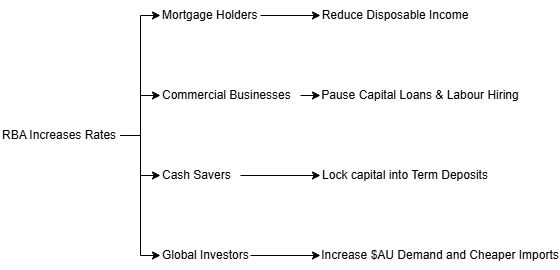
Central banks may argue that interest rates need to remain higher for longer.
Businesses may point to rising costs.
Workers may argue that wages have not kept pace.
All these explanations can contain some truth.
Yet from the perspective of households, the experience is much simpler.
- Bills arrive,
- Budgets tighten,
- Spending choices become harder.
This is one reason inflation becomes such a powerful political issue. The costs are highly visible, while the causes are often complex and contested.
Looking Beyond the Inflation Rate
The headline inflation figure remains an important measure of economic conditions.
But it has limits.
Understanding inflation requires asking deeper questions:
- Which prices are rising?
- Which households are most affected?
- Who bears the burden of controlling inflation?
- Are some groups benefiting while others struggle?
These questions matter because solutions depend on the answers.
Policies that help mortgage holders may do little for renters.
Policies that lower fuel costs may not help households facing rising housing expenses.
Looking only at the national inflation rate risks, missing the experiences of the people living behind the statistics.
Conclusion
Inflation is usually discussed as though it is a single number affecting everyone equally. It is a collection of thousands of individual price changes, experienced differently by every household.
Some Australians feel inflation most through groceries and petrol. Others notice it through rent, mortgage repayments or electricity bills.
Understanding those differences is essential if we want to understand who bears the burden of inflation.
But it also raises another question.
If some households are worse off when prices rise, does someone else become better off?
Next time, we’ll examine one of the most controversial ideas in modern economics: greedflation. Are businesses simply passing on higher costs, or have some firms used inflation as an opportunity to expand their profits?